
Sound Archive 2025: Year in Review
Written by Jesse Kenas Collins
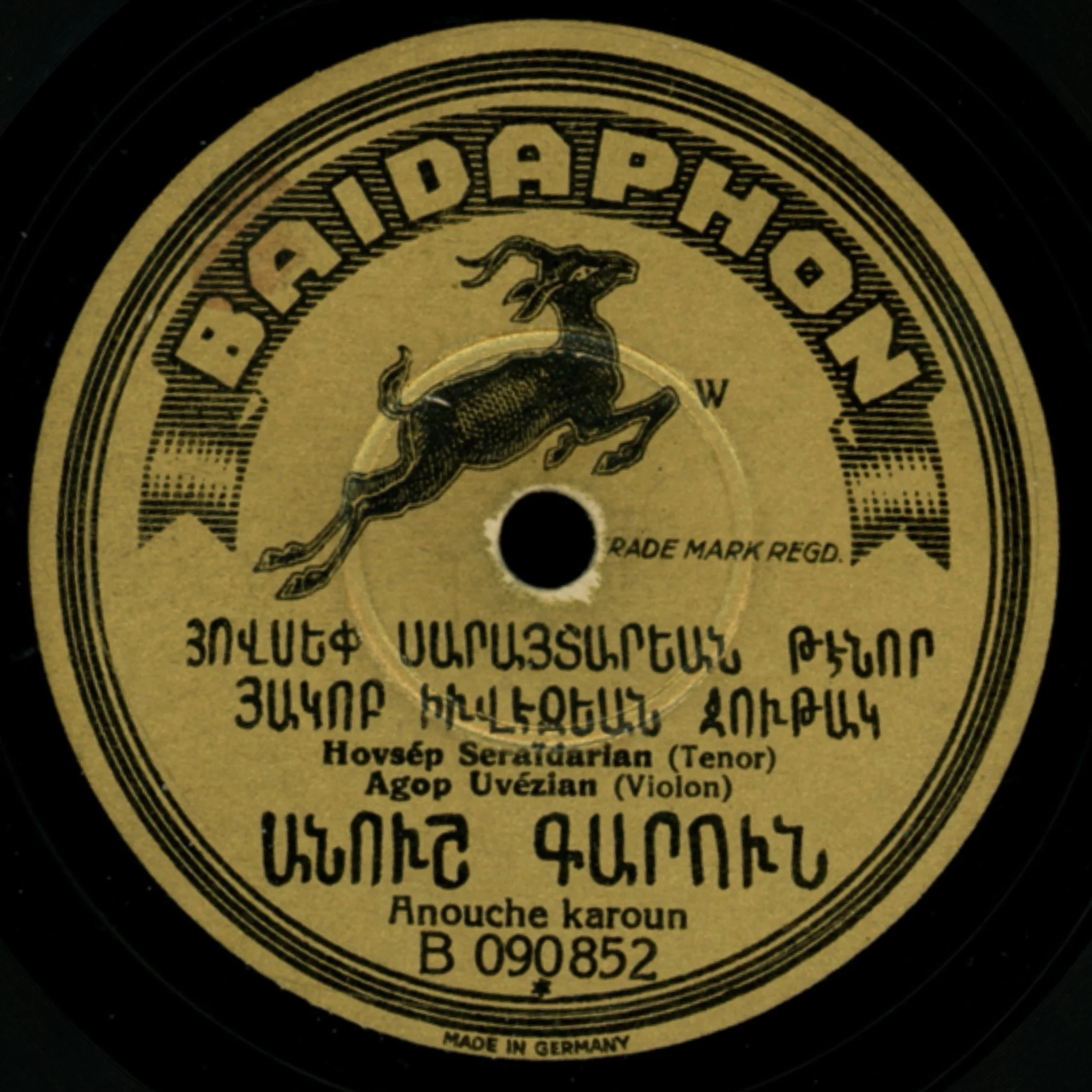
As another year comes to a close we wanted to recap some of the highlights from our 5th year of the Sound Archive project. With this year's 11 new features we’re proud to have reached a total of 51 in-depth presentations since this web series began. Over the course of 2025, we continued to digitize, restore, and research numerous recordings from the Museum’s expansive collection of 78rpm records, sharing dozens of unique audio files that express the breadth of Armenian musical and cultural heritage. This year we also brought some of this project into the galleries. Visitors can now visit our Sound Archive room on the Museum’s second floor, where they can see ephemera from the collection, read about the history of recording in Armenian communities, hear recordings, and read articles from the project.
In 2025 our posts focused on three major areas: the essential figures of the Armenian-American "Kef" music tradition; the foundational pillars of Armenian classical composition; and the crucial role of early broadcasting and film in transmitting culture.
In the category of figures instrumental to the development of Armenian-American “Kef” music tradition, we dove into two renowned oud players. We celebrated the enduring legacy of Udi Hrant, the Armenian oud master whose profound, inimitable style and mastery of taksim (modal improvisation) set the standard for generations of instrumentalists. His recordings and performances here in the United States were a huge influence on the generation of modern Armenian-American musicians who would come to develop the dance music of the mid-20th century. Among these musicians we explored the work and career of Chick Ganimian, whose recordings and extensive live performances made an enduring impact of their own. While the star of Armenian-American dance music is so often the oud, this rhythm-driven music relies on the beat of exceptional drummers; this feature on Peter and Enoch Gamoian explores the work of one such drummer.
Looking at Armenian classical composition we featured a range of composers and performers, ranging from the most iconic and foundational work of Gomidas Vartabed, whose history we explored through little-known archival documents and a set of 1914 recordings featuring Gomidas on the piano. Among the other iconic artists in the classical domain, we featured the renowned modern classical composer Alan Hovhaness and some of his early works for piano, rooted in the Armenian folk melodies of the Van region. Among the lesser known but fascinating artists in this cohort, we touched on three artists whose work ranged from composition, performance, publishing, and educators, who each brought their own perspective on and contribution to Armenian music. Our feature on Krikor Kalfaian explores the impact on Armenian classical composition through his self-publication efforts. Similarly Richard G. Hagopian exemplifies the impact that can be made through a dedication to music education. While Agop Asadourian, whose recordings feature Alan Hovhaness on piano, stands as a testament to the many artists whose work intersected with and developed alongside the more famous in the field.
Aside from these perspectives rooted in classical composition on the one hand and folk, popular, and dance music on the other, we presented three posts which explored more nuanced aspects of recording in the Armenian cultural context. Our feature on Armenian Radio looked at the way that technology and media in the mid-20th century worked to centralize and connect the Armenian communities in the US, both through secular and religious content. We also looked at the impact that film was making on the community at the time through the lens of music from the film Pepo, reissued on the California based label Rec-Art. Lastly, we presented a post focused on a single beloved song, Anoush Karoun, a piece of repertoire which cuts across a range of genres and contexts.
We’re looking forward to bringing more music and perspective in 2026. In the meantime, explore the links above and enjoy the selections included here from this year’s articles.
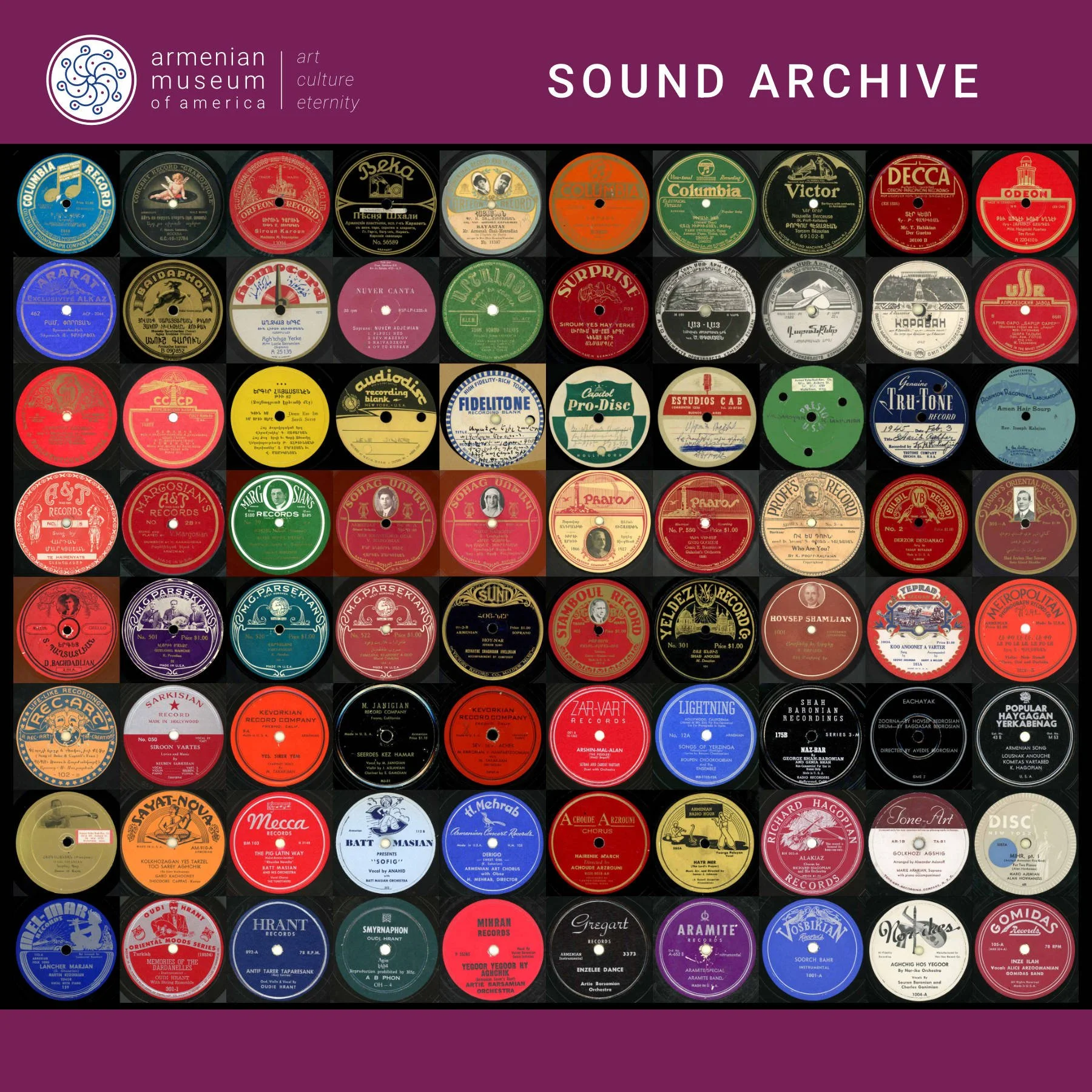
Record label poster now on view in the Sound Archive Gallery
A special thanks to the SJS Charitable Trust for their generous support of our work to digitize and share our collection of 78 rpm records.
