
By Sarah Behjet
Armenian Weekly
October 28, 2026
A spontaneous family visit to Watertown soon blossomed into an experience that shaped my identity.
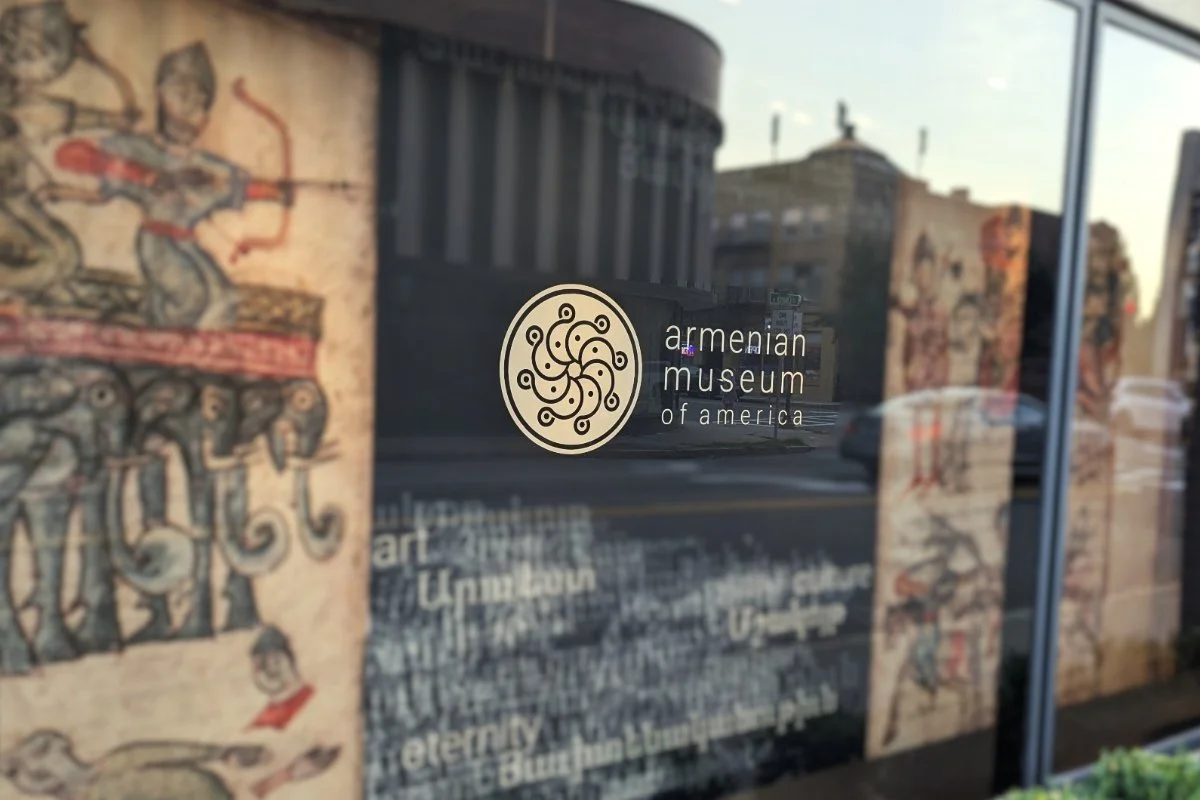
My family customarily makes the two-hour drive to Boston to explore new aspects of the city. Recently, however, we decided to make a pit stop in Watertown to discover new restaurants recommended by friends. I’d never formally visited Watertown, and I knew about the city’s long-established Armenian community and landmarks. Eager to make the most of our visit, I quickly searched online for Armenian-related sites. Among the copious pages listing Armenian markets and dance studios, a museum with remarkably diverse exhibitions stood out: the Armenian Museum of America (AMA). After telling my family about the museum, I began an experience that would renew my connection to Armenian history and the Armenian cause.
Upon stepping through the entrance doors of the AMA, I picked up a brochure to familiarize myself with the museum’s layout and offerings. The immensity of the museum instantly amazed me: The AMA has four floors brimming with ethnographic exhibits and unparalleled historical resources. While I initially meant for the visit to be relatively quick, an unexplainable sense of connection compelled me to explore each floor. The quality of the artifacts, along with the comprehensive descriptions accompanying each item, mesmerized me. The AMA proved to be a haven of knowledge that revealed a facet of Armenian history I had never encountered.
Although my excitement about visiting the AMA was palpable, my visit was also marked by an immense sense of grief, a natural response to countless historical injustices and horrors. The extent of Armenian suffering before and after the 1915 Armenian Genocide was vast: From the erasure of Armenian nomenclature for flora and fauna to large-scale death marches, Ottoman oppressors mercilessly sought to break the spirit of our Armenian ancestors.
Beyond the anguish endured by Armenians, the AMA’s exhibits also communicated details of the genocide that connected to my own family’s story. As I studied the routes on a deportation map, cities that have echoed through family conversations jumped out at me: Mosul, Baghdad and Diyarbakir (Tigranakert). I peered at photos of agonized Armenian families who had survived death marches and, as a result, had to find ways to survive in Iraq’s arid climate. These individuals, whose faces reflected grit and exhaustion, braved starvation, attacks and torture to keep their Armenian heritage alive. While many died at the hands of brutal oppression, the AMA made sure of one thing: Armenians near and far would know that their existence meant resistance.
Filled with a renewed sense of purpose and responsibility, I was heartened to explore the AMA’s plentiful art, fashion and literary collections. Wedding dresses, silk gowns and intricately crafted robes showcased Armenian creativity, with some garments dating back to 1911.
I was also fascinated by a detailed replica of the Bogigian House, an estate belonging to the maternal grandparents of Dr. Hagop Deranian. Each part of the house, including its garden, well and abundant fruit trees, was carefully explained in the context of the Bogigian family’s history. The sheer amount of detail found in each tangible museum artifact astonished me; I had never before thought that such accuracy could emerge from such a devastating history. It was then that I realized Armenians had not been permanently defeated. By memorializing our past, we gain the strength to inspire future change.
The hours I spent at the AMA in Watertown left me with several mementos: an annotated brochure, a gold pin bearing the Armenian flag and a photo album that I hope will last for generations. A spur-of-the-moment decision to reconnect with Armenian history and resilience awakened something in me that extends beyond the AMA’s walls. I’ll carry the strength of those who came before me unapologetically; after all, it’s the least we can do to ensure that Armenian identity endures.
Sarah Behjet is a high school student from Connecticut. Her work has been featured in The Connecticut Mirror, CT Insider, Yale Daily News, Journal of Student Research and others.
Source: https://armenianweekly.com/2026/10/28/finding-renewed-purpose-in-the-armenian-museum-of-america/