
Beyond the Curtain:
Materiality and Devotion in Armenian Art
Coming Soon
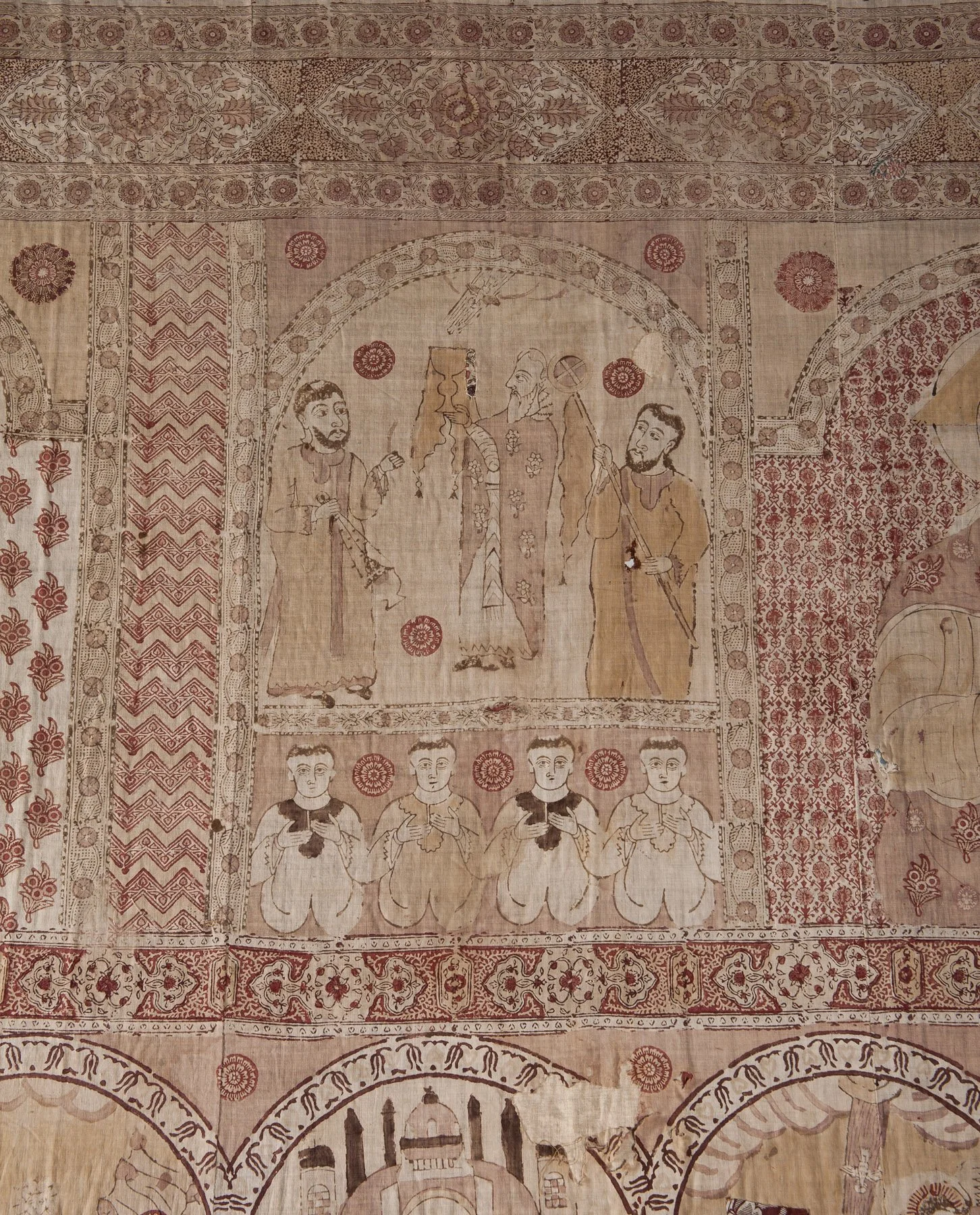
Divine Liturgy (Surb Patarag)"Detail from Altar Curtain, 1766, Tokat
Selected Works
These images are a selection of works from the exhibition. We invite you to explore the galleries to discover the full range of objects, materials, and devotional traditions represented in Beyond the Curtain.
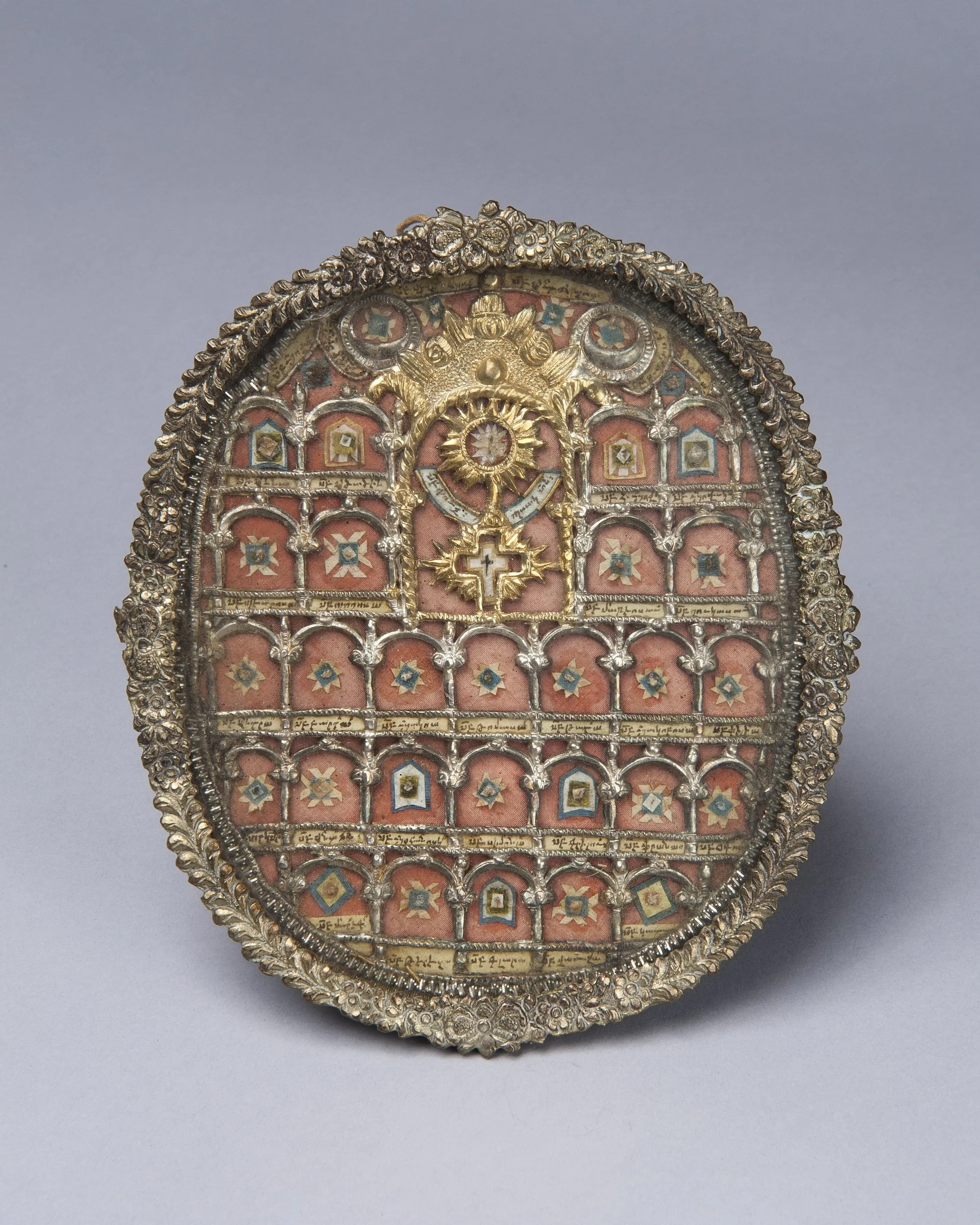
Reliquary of the Sacred Thorn
This elaborate eighteenth-century multiple reliquary is said to contain a thorn from Christ’s Crown of Thorns alongside several other relics. Multiple reliquaries of this kind are rare and were often associated with major ecclesiastical centers: this example may have come from the See of Cilicia at Sis or the See of Vaspurakan at Aghtamar, making this example especially significant. Its crowning sunburst frame distinguishes the sacred fragments, transforming them into a visually commanding devotional object.
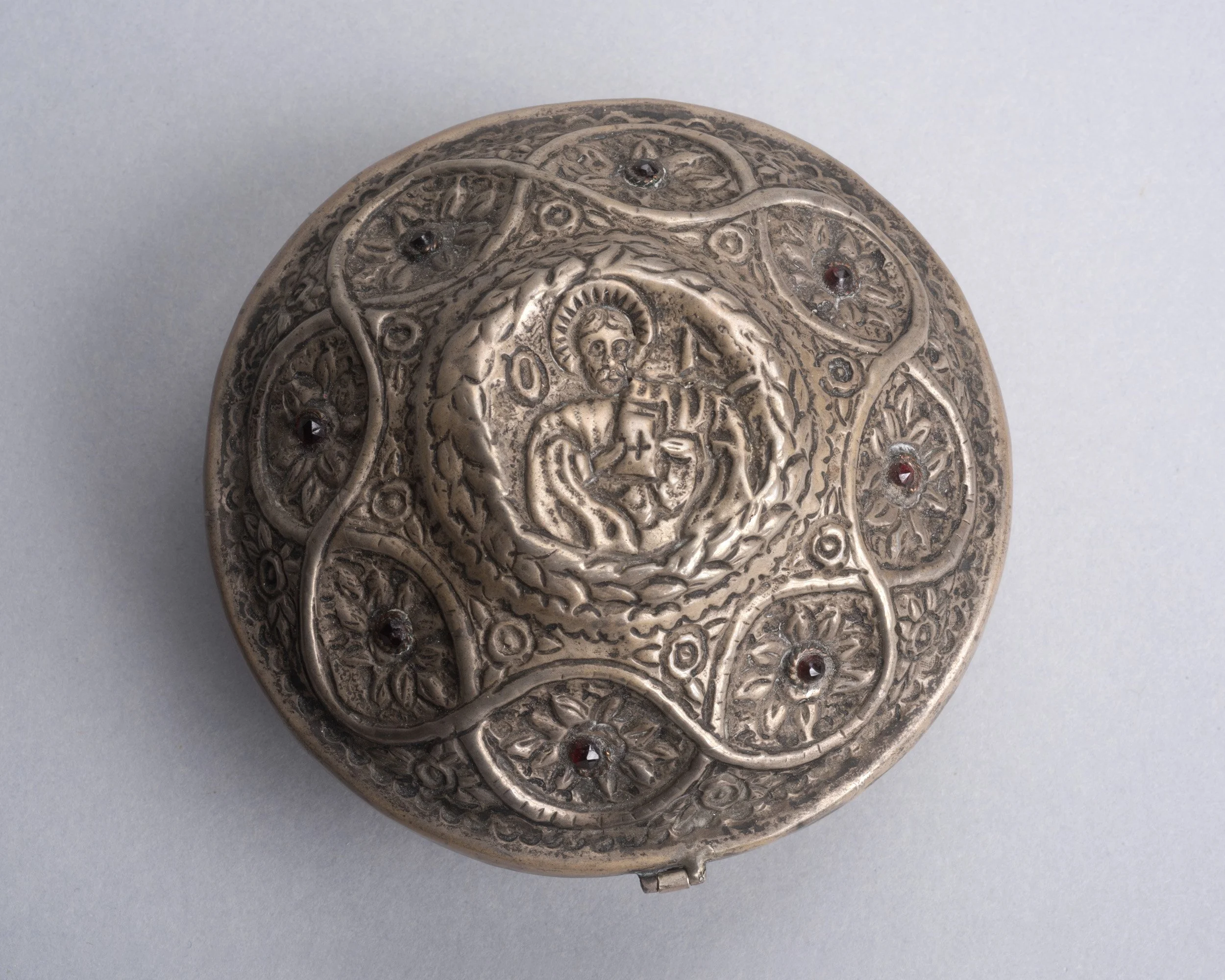
Pyx
This silver pyx was made to hold consecrated Eucharistic bread. On its domed lid, the Virgin and Child create a close relationship between image and function: Mary bears Christ, while the vessel itself was made to contain the Eucharist understood within Christian worship as Christ’s body.
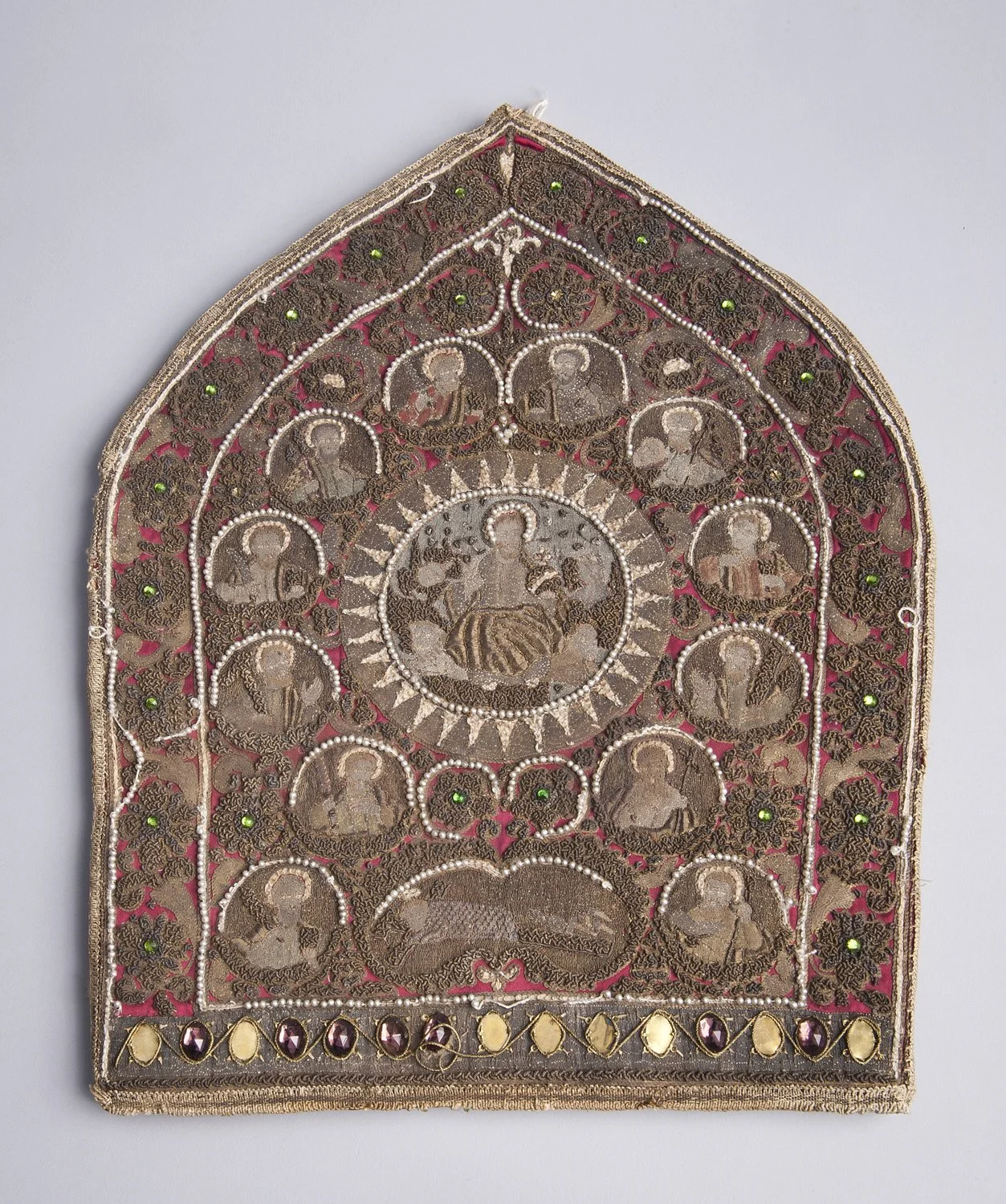
Bishop's Mitre
Worn by a bishop during the Divine Liturgy, this mitre combines sacred imagery with precious materials. Gold metallic embroidery, pearls, and jewels enliven depictions of Christ, the Apostles, and the Lamb of God, allowing the vestment to catch and reflect light within the church.
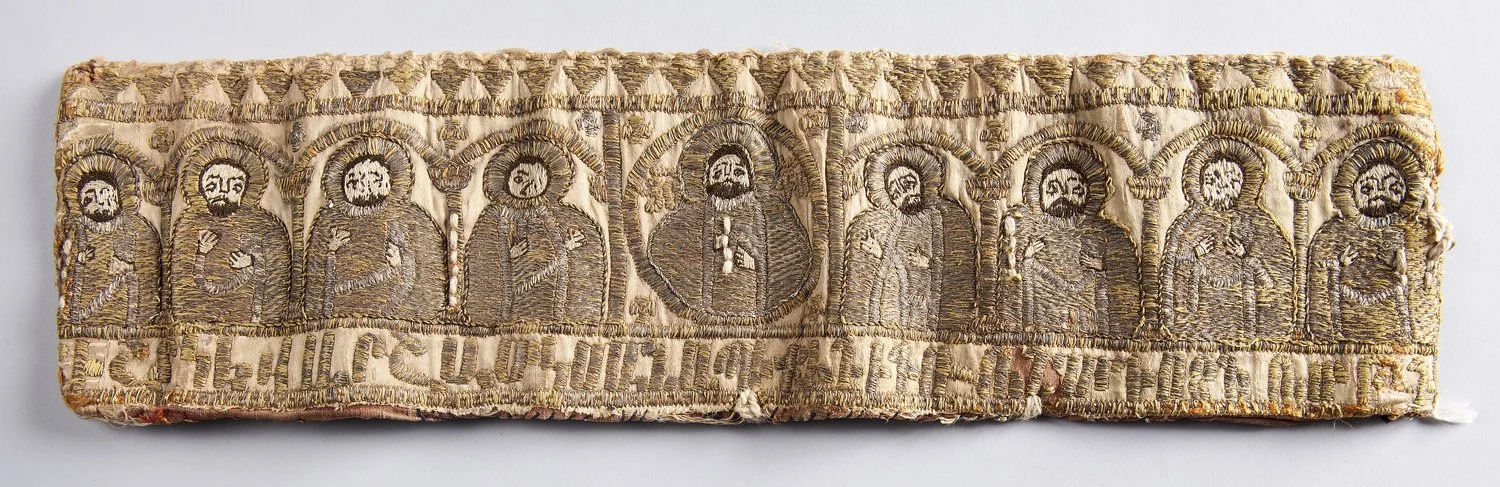
Vakas
This stiff liturgical collar was worn by an Armenian priest during the Divine Liturgy. Silk and silver metallic embroidery create its sacred imagery, while layers of canvas and leather give the textile enough structure to become part of the priest’s ceremonial dress.
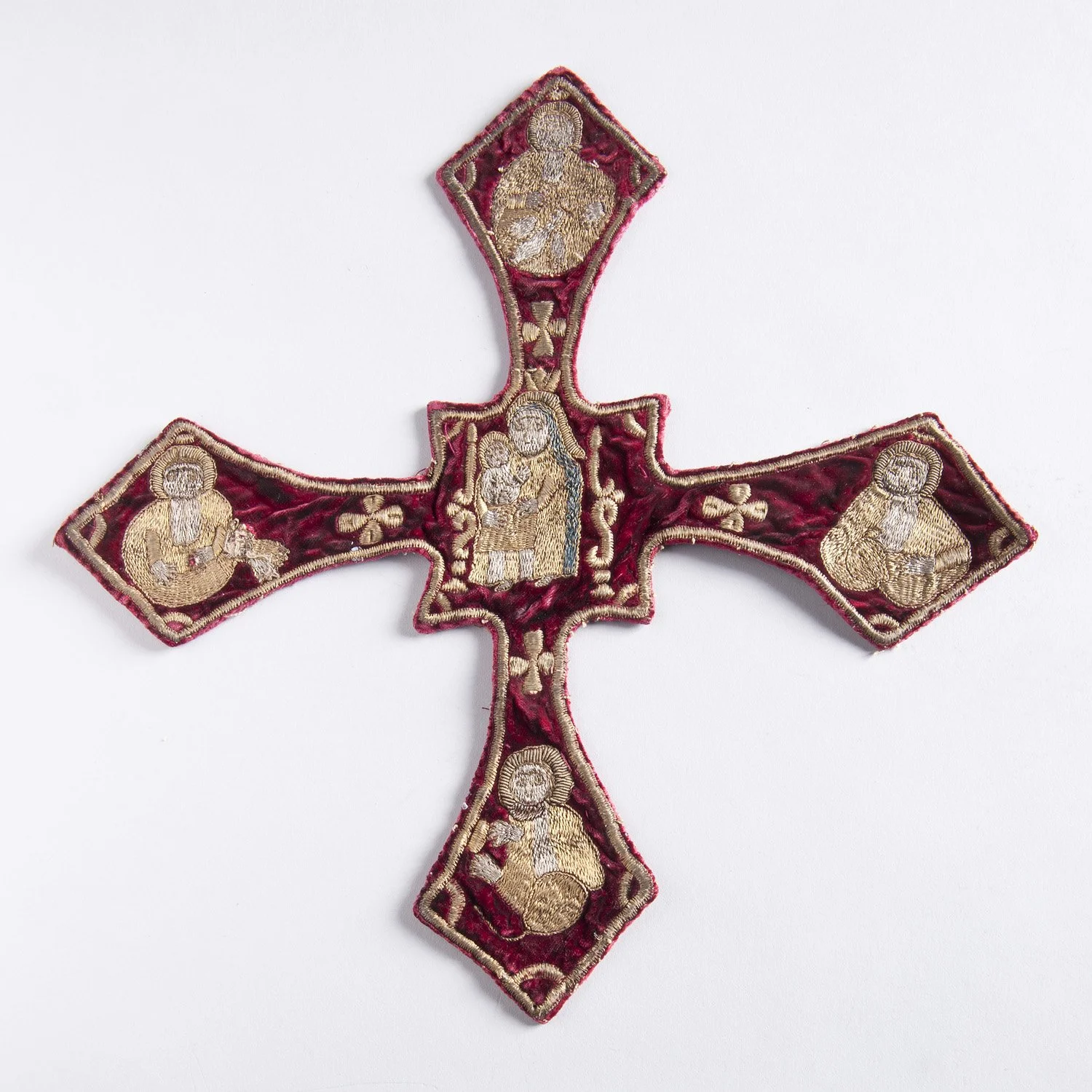
Embroidered Cross
This embroidered textile places the Virgin Mary at the center of the cross, with the four Evangelists at its ends. Worked in gold and silver metallic thread over red velvet, its sacred imagery is constructed directly through the material and labor of embroidery.
About the Exhibition
Curated by Anahit Gasparyan, Beyond the Curtain: Materiality & Devotion in Armenian Art explores how Armenian religious experience has been shaped through the physical world.
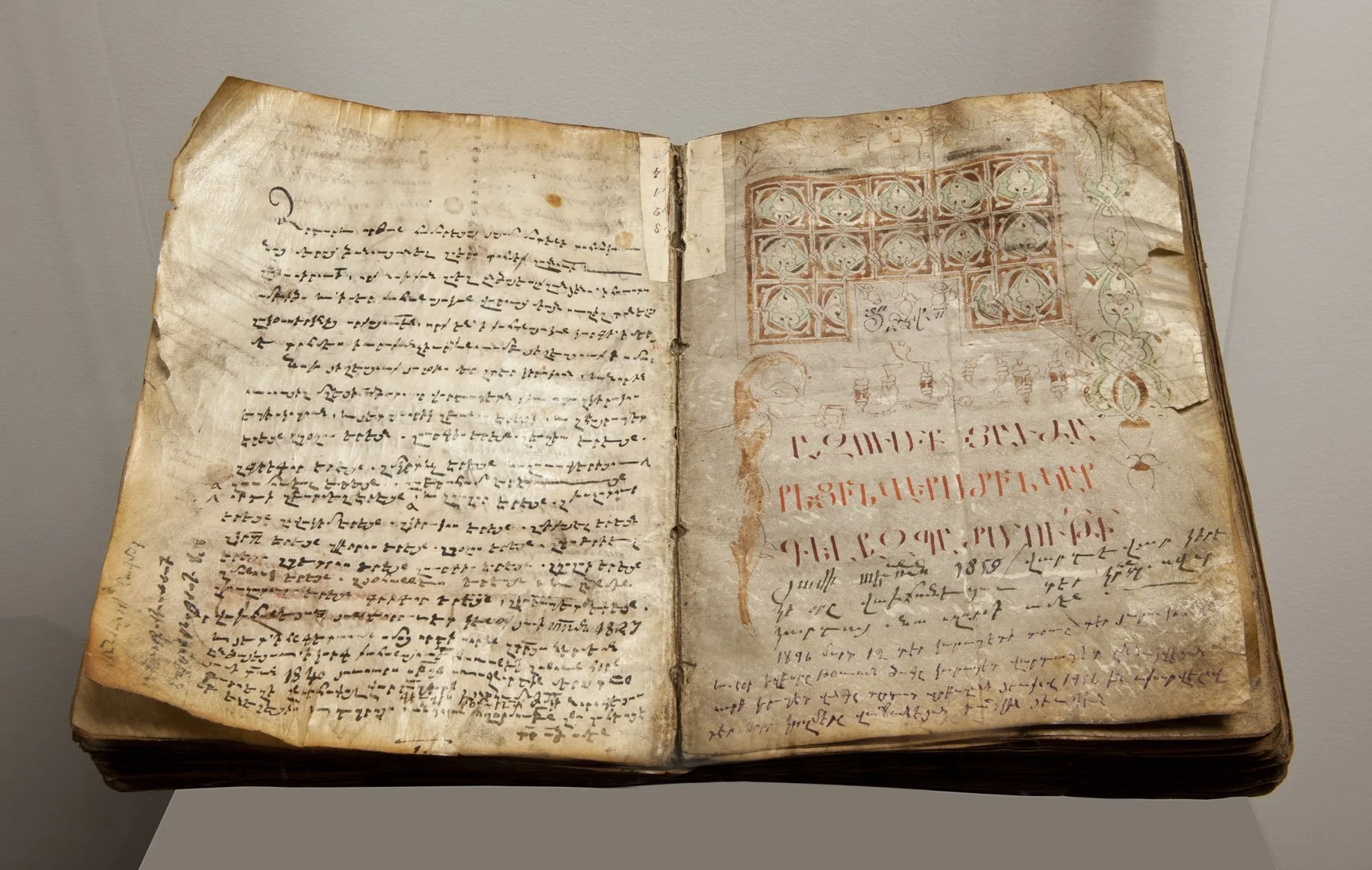
At the heart of the exhibition are the Mardin Altar Curtain (1766) and the Garabed Gospel (1207), which connect the exhibition’s eighteenth and nineteenth century works to the deeper traditions of medieval Armenian Christianity.
Manuscripts, crosses, reliquaries, vestments, textiles, and other sacred objects reveal how materials such as parchment, silk, metal, wood, leather, and precious stones gave physical form to faith. These objects were not simply made to be seen they were opened, carried, worn, touched, and used in ritual.
Through these repeated acts, material objects became active participants in devotional life. Their weight, texture, movement, and craftsmanship shaped how individuals and communities encountered the sacred.
Beyond the Curtain invites us to look beyond religious art as an abstract expression of belief and consider faith as something crafted, handled, maintained, and renewed, a material tradition carried across generations.
About the Curator, Anahit Gasparyan
Anahit Gasparyan’s curatorial and scholarly practices engage Armenian art across historical and contemporary contexts, with a focus on how narratives of memory, identity, and displacement are constructed through visual culture. She holds an MA from the History of Art and Architecture Department from Tufts University, where she specialized in medieval Armenian and Byzantine art, with research on manuscript illumination and its relationship to architectural space. Gasparyan’s previous experience includes roles at the Getty Research Institute and the MassArt Art Museum.